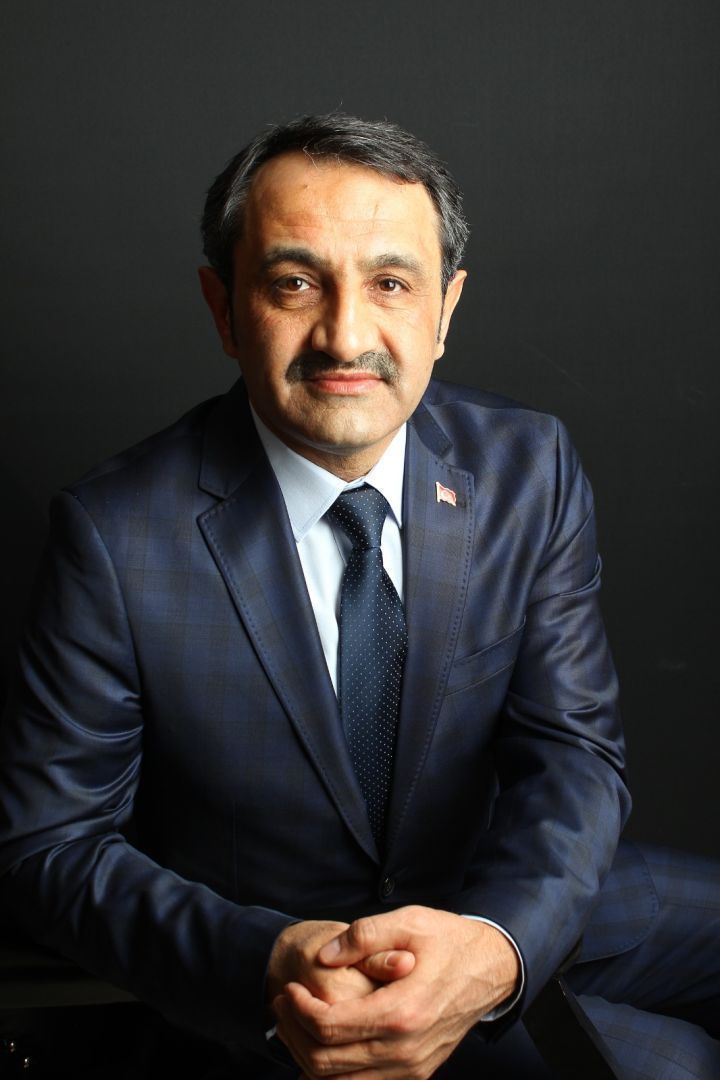
Dr. Cemil Paslı: İnsan İçin “Apaçık Ufuk” Ne Demektir?
Kayıt Tarihi: 30.10.2026 06:08 - Son Güncelleme: 20.11.2026 12:30
Kendinden önce binlercesine olduğu gibi Peygamberimiz Hz. Muhammed Mustafa (s.a.v.)’ya da ilk vahyi Hz. Cebrail (a.s.)’in getirişi Kur’an- Kerim’de şöyle anlatılır:
“Bu Kur’an/vahiy (Allah katında) kerim (şerefli) olan bir elçinin (Cebrail’in) getirdiği sözdür. O elçi, güçlüdür. Kudret ve egemenlik tahtının sahibi (olan Allah) katında çok itibarlıdır. O, (bütün melekler ve peygamberlerce) saygı gören ve güvenilen biridir. (Ey Kureyşliler!) Sizin arkadaşınız (Muhammed) bir deli değildir (vahyi böyle güvenilir ve saygın bir melek vasıtasıyla almıştır). Şüphesiz (Muhammed) onu (Cebrail’i) apaçık ufukta görmüştür. Kaldı ki O (Cebrail), aldığı gayb bilgilerinin hiçbirini gizlemez (bu konuda töhmet altında bırakılamaz). “ Tekvir, 81/19-24.
İşrakilik felsefesinin kurucusu Şehâbeddin es-Sühreverdi (1154-1191) “apaçık ufuk” tabirlerini “teellüh” tabiri ile izah eder.
Teellüh, Arapça kökenli Osmanlıcaya da geçmiş olan bir kelime olup; sözlük manasında; temel olarak kulluk ve ibadet etmek ile tazarru etmek (yalvarmak, yakarmak) anlamlarına gelmektedir.
Kelimenin kullanıldığı felsefe ve tasavvuf tarihinde ise özel bir terimdir:
Sühreverdî’ye göre teellüh; akılcı incelemeyi (bahs) doğrudan içsel aydınlanma, keşf, ilham ve sezgiyle (zevk) birleştiren, ilâhî bilgiye ve manevi tecrübeye ulaşma halidir.
Sühreverdi’nin Hikmet’ül-İşrak kitabı Fatih Sultan Mehmet’in cönkünde sürekli taşıdığı 4 kitaptan birisidir.
Teellüh Sühreverdi’nin yorumu ile zengin bir manaya kavuşmuştur.
Sühreverdi teellühle gerçek kulluğu akıl ve kalbi birlikte hareket ettirmek olarak tasvir etmiştir.
Sühreverdî, teellühte bilgi edinmenin sadece aklî istidlâller neticesinde oluşturulmuş fikirler olmayıp zevke yahut mânevî tecrübe mahiyetindeki bilgilere dayandığını iddia eder.
Sühreverdi teellühü şöyle delillendirir:
Kur’an-ı Kerim’de “apaçık ufuk”ta görünen ifadesindeki Cibrîl’in (et-Tekvîr 81/23) Hz. Peygamber (s.a.v)’e aktardığı vahyi bilginin, –ufkun açık olması tabiri ile- kıyamete kadar diğer müminlere içinde ilham olarak devam edeceğini savunur.
Dolayısıyla akli bilgi için çaba gösteren insanın ilhamla da destekleneceğini belirtir.
İnsanlar aklı kullanarak nazar metodu ile hakikat ve hikmeti arama yolunda azami çaba gösterdiklerinde “apaçık ufukta bekleyen” Hz. Cebrail Allah’ın izni ve inayeti ile kalbe ilham yoluyla manalar indirecektir.
Bu sebeple içtihad yolu kıyamete kadar açık bırakılmış, cehd ve çaba içinde olan her mütefekkir nazarlarına destek olarak ilhamla/keşfle desteklenmiştir.
Bu sebeple aklın nuru fen bilimleri, vicdanın ışığı din ilimleri tasnifi yapılmıştır.
Akıl ve kalp bir akünün kutup başları ya da bir kuşun kanatları gibi birlikte çalıştığında hakikat ve hikmete ulaşılacağı temel ilke olarak benimsenmiştir.
Burada ilk ve öncelik akla/nazara verilmiş ilham/keşf sonrasında onu tamamlamıştır.
Hadis-i Kudsi’de bu “apaçık ufka” ulaşma şöyle anlatılmıştır:
"Kulum, kendisine farz kıldığım şeylerden daha sevimli bir şeyle bana yaklaşamaz. Kulum nafile ibadetlerle de bana yaklaşmaya devam eder; ta ki onu severim. Sevince de onun işiten kulağı, gören gözü, tutan eli, yürüyen ayağı olurum..." (Buhârî, Rikâk, 38)
Sultan Mehmet’i “Fatih” yapan 4 kitabın (Sühreverdi-Hikmet’ül-İşrak, İbn Sina-el-İşarat ve’t-Tenbihat, Konevi-Miftahu’l-Gayb, Gazali-Tehafüt’ü-Felasife) konusu insanın aklı/nazar/istidlal ve kalbi/keşf/müşahede birlikte aktif olarak nasıl kullanılabileceği üzerine idi.
Sultan Mehmet’te bunları okudu, anladı ve çağ açıp çağ kapattı.
Akıl ve kalp bir akünün kutupbaşları gibidir.
İkisi birden devrede olmadığında beşer insan olamaz, insan kalamaz, halife makamının gereğini yerine getiremez.
Her mümin kıyamete kadar “apaçık” bırakılmış ufukta bekleyen ilham/keşf/müşahede nimeti için aklını aktif kullanıp kalbini de günahlardan uzak ve temiz tutarak “teellüh” ile Rabbine yaklaşmaya çalışmalıdır.
What Does a “Clear Horizon” Mean for a Human Being?
The delivery of the first revelation to our Prophet, Muhammad Mustafa (peace be upon him)—much like the revelations brought to thousands of prophets before him—by the Angel Gabriel (peace be upon him), is described in the Holy Quran as follows:
“Indeed, this Quran/revelation is the word brought by a noble messenger (Gabriel) who is held in high honor (in the sight of Allah). That messenger possesses great strength and holds a position of high status in the presence of the Lord of the Throne of Power and Sovereignty. He is one who is respected and trusted (by all the angels and prophets). Your companion (Muhammad)—O people of Quraysh—is not a madman (for he has received this revelation through such a trustworthy and esteemed angel). He (Muhammad) has surely seen him (Gabriel) on the clear horizon. Moreover, he (Gabriel) does not withhold any of the knowledge of the Unseen that he has received (and thus cannot be accused of concealing anything).” (At-Takwir, 81:19–24)
Shihab al-Din al-Suhrawardi (1154–1191), the founder of the Illuminationist (Ishraqi) school of philosophy, interprets the expression “clear horizon” through the concept of *ta’alluh*.
*Ta’alluh* is a term of Arabic origin—which also passed into the Ottoman Turkish language—that, in its literal dictionary sense, primarily denotes servitude, acts of worship, and *tazarru* (supplication, pleading, or beseeching).
Within the history of philosophy and Sufism, however, the term carries a specific, technical meaning:
According to Suhrawardi, *ta’alluh* is... It is a state of attaining divine knowledge and spiritual experience that integrates rational inquiry (*baḥth*) directly with inner illumination, discovery, inspiration, and intuition (*dhawq*).
Suhrawardi’s *Hikmat al-Ishraq* (The Philosophy of Illumination) was one of the four books that Fatih Sultan Mehmet (Mehmed the Conqueror) kept with him at all times in his personal collection.
The concept of *ta’alluh* (attaining a divine-like state or the pursuit of the Divine) acquired a rich, profound meaning through Suhrawardi’s interpretation.
Suhrawardi described *ta’alluh*—the realization of true servitude—as the act of engaging both the intellect and the heart in unison.
Suhrawardi argues that, within the context of *ta’alluh*, the acquisition of knowledge is not merely a matter of ideas derived from rational deduction; rather, it is rooted in *dhawq* (direct, intuitive tasting) or knowledge gained through spiritual experience.
Suhrawardi provides the following justification for *ta’alluh*:
He posits that the revelatory knowledge conveyed to the Prophet (peace be upon him) by Gabriel—who appeared on the "clear horizon" (as mentioned in the Quran, *at-Takwir* 81:23)—continues to manifest for other believers until the Day of Judgment in the form of *ilham* (divine inspiration), symbolized by the "clarity of the horizon."
Consequently, he asserts that an individual who strives for rational knowledge will also be supported by divine inspiration.
When human beings exert their utmost effort to seek truth and wisdom through the use of reason and contemplative inquiry, the Archangel Gabriel—who awaits on the "clear horizon"—will, by the permission and grace of God, convey meanings into the human heart by way of inspiration.
For this reason, the path of *ijtihad* (independent legal or intellectual reasoning) has remained open until the Day of Judgment; every thinker who engages in earnest striving and effort has been supported by inspiration (*ilham*) or spiritual unveiling (*kashf*) to assist their intellectual inquiries.
It is for this same reason that a classification was established: the light of reason corresponds to the natural sciences, while the light of conscience corresponds to the religious sciences.
It has been adopted as a fundamental principle that truth and wisdom can be attained only when the intellect and the heart work in tandem—much like the terminals of a battery or the wings of a bird.
In this framework, priority is given to the intellect and contemplative inquiry, while inspiration and spiritual unveiling serve to complete the process.
In a *Hadith Qudsi* (a sacred tradition), the attainment of this "clear horizon" is described as follows:
"My servant draws not near to Me with anything more beloved to Me than the religious duties I have made obligatory upon him. My servant continues to draw near to Me through voluntary acts of worship until I love him. And when I love him, I become his hearing with which he hears, his sight with which he sees, his hand with which he grasps, and his foot with which he walks..." (Bukhari, *Riqaq*, 38)
The four seminal texts that helped shape Sultan Mehmed into "the Conqueror" (*al-Fatih*)—Suhrawardi’s *Hikmat al-Ishraq* (Philosophy of Illumination), Avicenna’s *al-Isharat wa al-Tanbihat* (Remarks and Admonitions), al-Qunawi’s *Miftah al-Ghayb* (Key to the Unseen), and al-Ghazali’s *Tahafut al-Falasifa* (The Incoherence of the Philosophers)—all centered on how the human intellect (through inquiry and logical deduction) and the heart (through spiritual unveiling and direct contemplation) can be actively employed together.
Sultan Mehmed read and understood these things, and in doing so, he brought one era to a close and ushered in another.
The intellect and the heart are like the terminals of a battery.
Unless both are engaged, a human being cannot truly become or remain a human, nor can they fulfill the requirements of the station of *khalifa* (steward/vicegerent).
Every believer, until the Day of Judgment, should strive to draw near to their Lord through *ta’alluh* (the process of becoming God-centered)—by actively employing their intellect and keeping their heart pure and free from sins—in order to attain the blessings of inspiration, spiritual discovery, and contemplation that await on the horizon, left wide open for all to seek.
YORUM YAP